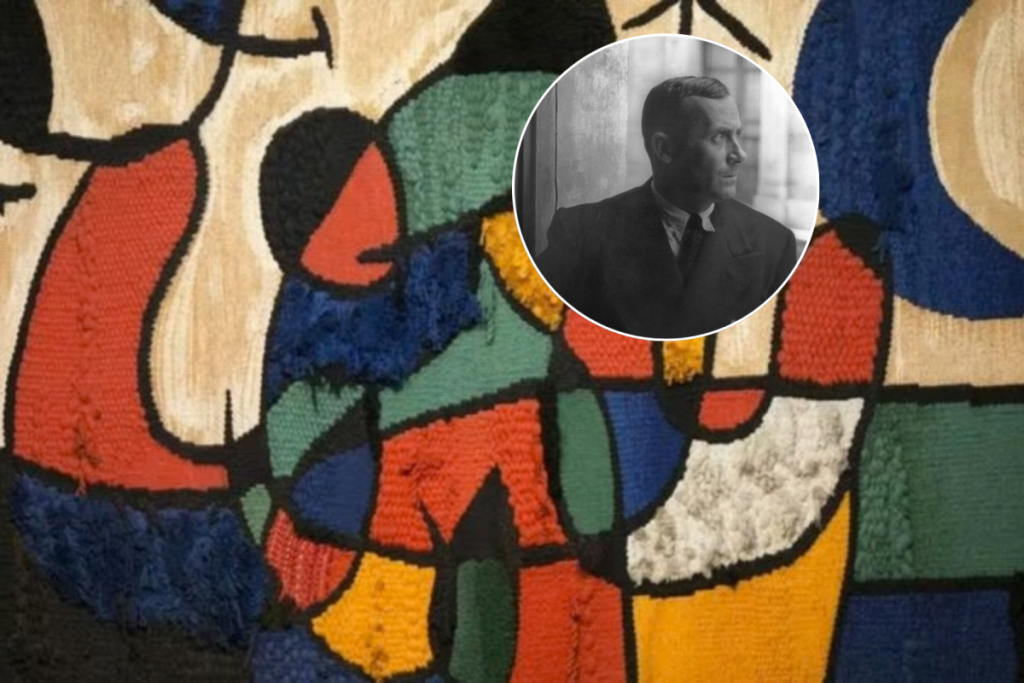

So is the legend of the tortured artist true? There is no such thing as a serene Miró. This, in essence, is what the exhibition *Joan Miró: Protest* sets out to demonstrate , and it is being hosted for the first time in such a comprehensive format at Les Abattoirs in Toulouse. Nearly 200 works —including several rarely shown in France —trace the career of an artist in constant rebellion, from the surrealist ballets of the 1920s to the activist tapestries of the 1970s.
The exhibition’s title is, in fact, taken from a leaflet. In 1926, Louis Aragon and André Breton brandished a “protest” during Diaghilev’s ballet *Romeo and Juliet*, for which Miró designed the costumes. This seminal episode will serve as the starting point for a chronological journey tracing the Catalan artist’s various attempts to transcend—or even “assassinate”—painting.
A fascinating and unconventional exhibition that visitors can explore starting October 3, 2026, in Toulouse.
Discover a political, collaborative, and resolutely anti-authoritarian Miró at Les Abattoirs in Toulouse
But by the way, do you really know the story of Joan Miró? Before becoming one of the great names inmodern art, Joan Miró never stopped experimenting. Between 1927 and 1937, the artist took a particular interest in dance and explored unconventional materials, such as raw canvas and sandpaper.
Then came the Barcelona Series, created between 1939 and 1944, against the backdrop of the war and the early days of Franco’s regime. This marked a turning point in his work: forms became more brutal, bodies were distorted, and movement grew more instinctive.
And a few decades later, by which time he was already a world-renowned artist, Miró chose to surround himself with a new generation of socially engaged creators. Among them was Josep Royo, an artist specializing in tapestry, with whom he produced a remarkable collection of tapestries and “sobreteixims” at the Farinera in Tarragona.
Cinema also joins the fray. Pere Portabella directed several films centered on Miró, some of which punctuate the exhibition’s narrative.
And then there is La Claca, a theater troupe with which Miró collaborated on *Mori el Merma* in 1976. Loosely inspired by Alfred Jarry’s *Ubu Roi*, the play features a grotesque despot who clearly echoes the figure of General Franco. For the occasion, Miró designed the costumes for the production, which will be on display in the exhibition.
Another Way of Looking at Miró
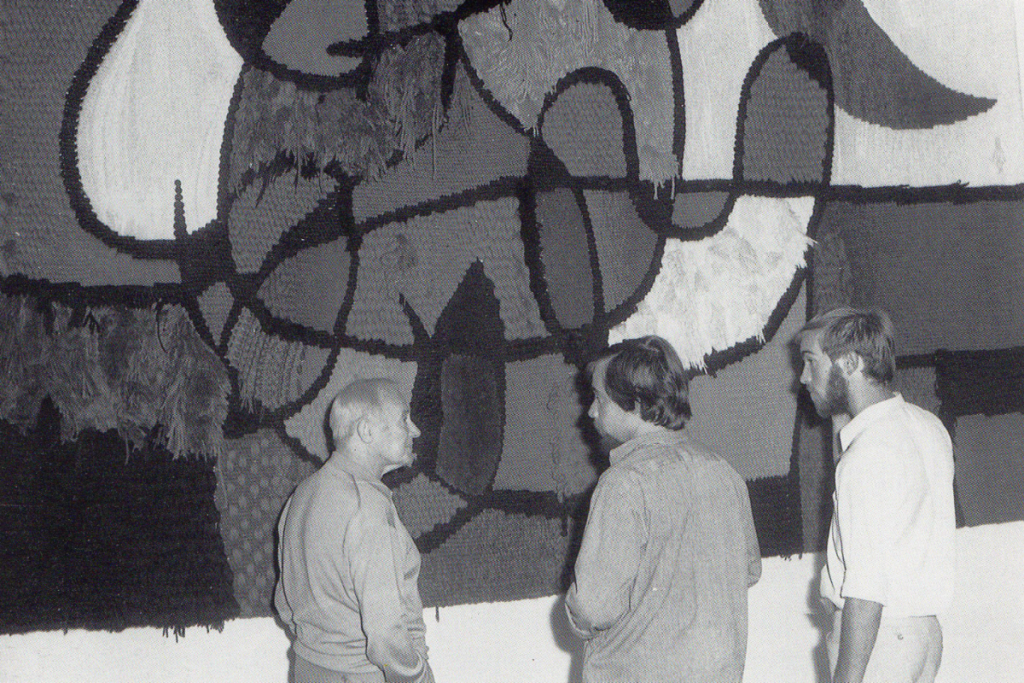
Perhaps this is one of the exhibition’s major attractions: moving beyond the myth of the brilliant artist working alone in his studio. Here, Miró appears instead as an artist who engages in dialogue, collaborates, and creates with others —artists, filmmakers, artisans, and theater professionals.
A more collective—and perhaps more vibrant—way to discover his work.
An opening lecture open to the public
On Saturday , October 3, 2026, from 3:30 p.m. to 5:30 p.m., Carles Guerra and Lauriane Gricourt, the two curators, will give an opening lecture in the Abattoirs auditorium. Admission is free, subject to availability.
Full details about the exhibition are available on the Abattoirs website.