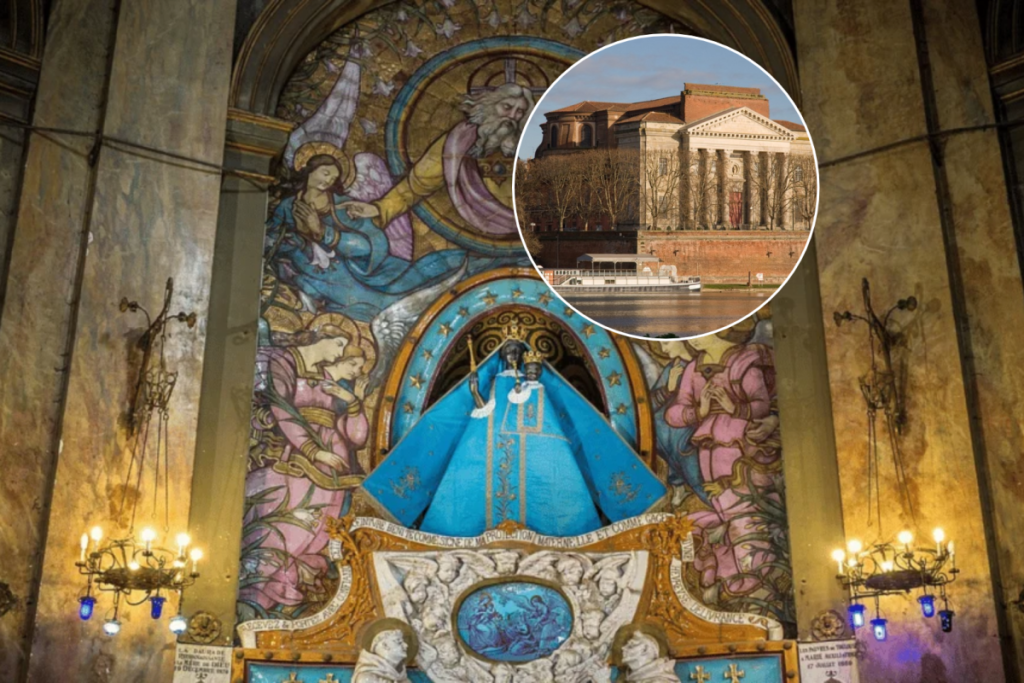

She has stood at the heart of the Basilica of La Daurade for centuries, enveloped in an aura that neither time nor revolutions have managed to erase. But why is this statue of the Virgin Mary black? The answer is, as is often the case, more complex than it seems.
According to the Toulouse historian René Souriac, the statue—dating from the 14th century—has not always had this dark hue: “In the 15th century, it was already called ‘Brune’; it did not become the ‘Black Virgin’ until the 17th century.” ” Two theories exist: a natural darkening of the wood over time, or the cumulative effect of smoke from the countless candles lit in her honor over the generations. Toulouse Secret tells you more about this 2-meter-tall statue that attracts many curious visitors.
A black color and numerous powers
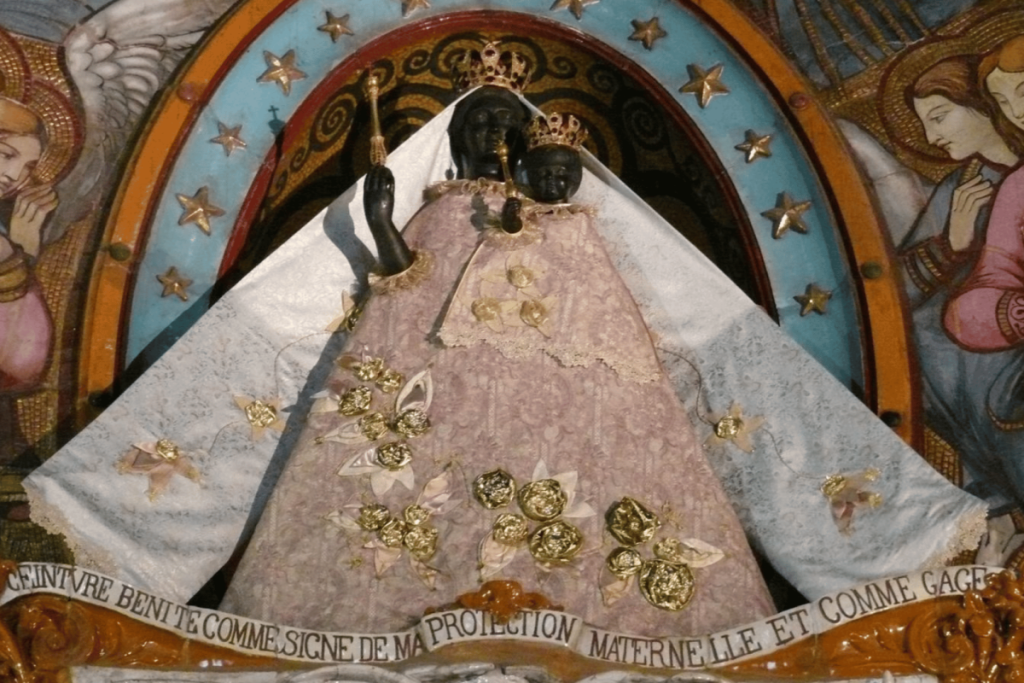
Her color shrouds her in mystery. Carved from wood, the Black Virgin of La Daurade is—as her name suggests—black in color. She is not the only one of her kind to have appeared in Europe and southern France during the Middle Ages. These statuettes of the Virgin are said to possess special powers thanks to this distinctive hue.
In fact, in addition to protecting Toulouse, she also grants her protection to pregnant women and new mothers. Hence her nickname, Our Lady of Safe Childbirth. The parish even offers expectant and new mothers who request them “belts of the Virgin”—that is, blessed ribbons to tie around the waist—which are meant to protect them. Believers also think she is responsible for another miracle: it is said that she saved the Saint-Michel neighborhood during the fire of 1672.
A statue that is not the original
Behind the icon lies a history of successive replacements. The original 14th-century statue was stolen and replaced with an exact copy. In 1799, this copy was burned in Place du Capitole during the French Revolution because it was deemed too scantily clad (an irony of its history, given the names of the fashion designers who would later dress it)… The current Black Madonna was carved in 1807, based on the memories of those who had seen the previous one. A passionate researcher, former engineer Lionel Lescouzères, has also revealed the existence of an even earlier statue, dating from the 12th century, which disappeared during the demolition of the Daurade in 1761.
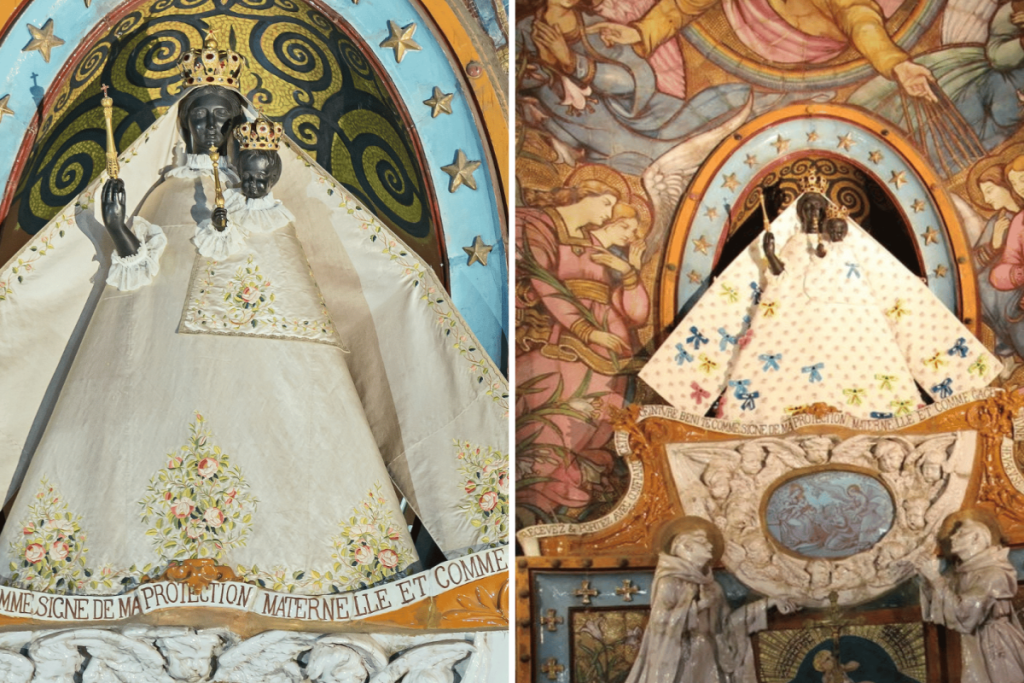
The Best-Dressed Lady in Toulouse
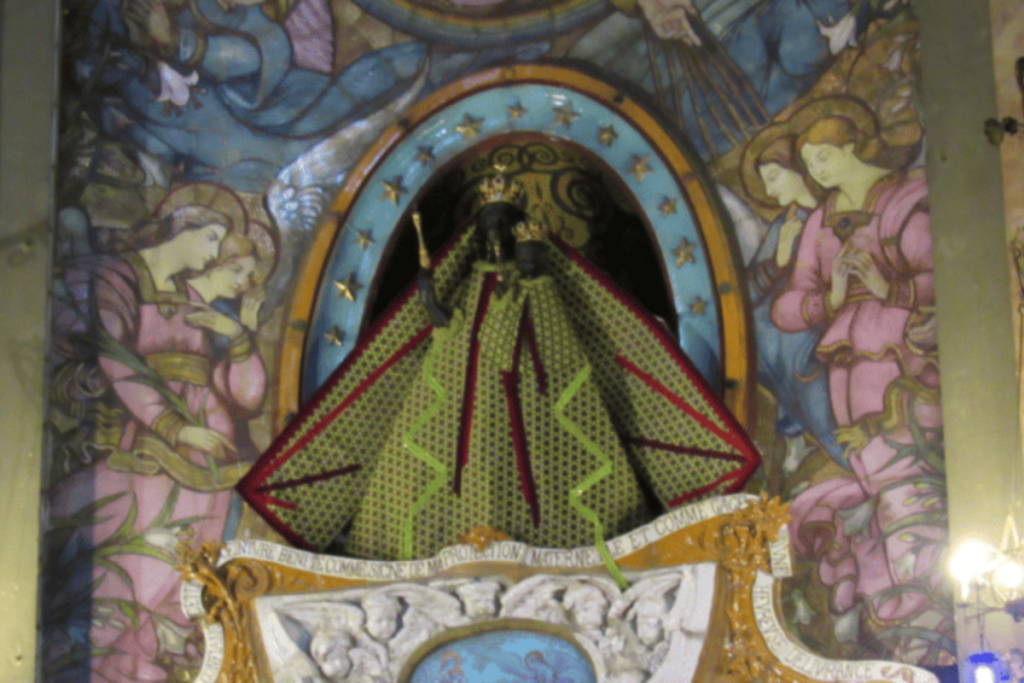
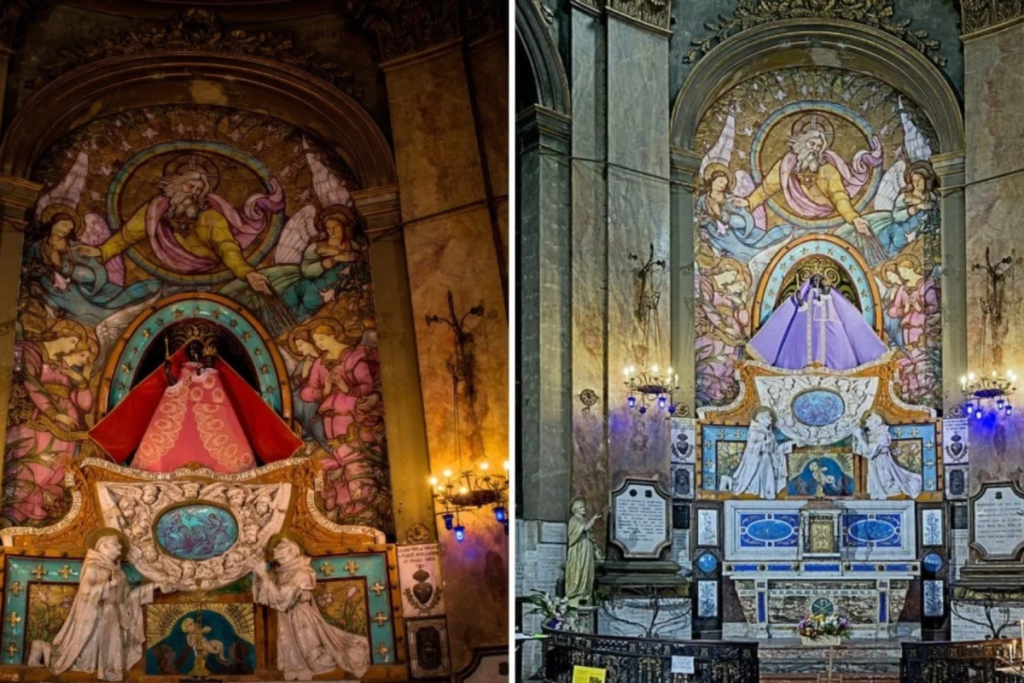
Perhaps this is where the most unexpected aspect of this two-meter-tall statue lies: her wardrobe. In 2008, the association dedicated to preserving the basilica reached out to several big names in French fashion to expand her wardrobe. Yves Saint-Laurent, Christian Lacroix, Franck Sorbier, and Jean-Charles de Castelbajac all stepped up to the challenge. The latter created the famous “Battle Dress, ” a jacquard dress with camouflage patterns, exhibited at Les Abattoirs as part of the retrospective *L’Imagination au pouvoir*.
Among the most emotionally charged items is “the AZF dress, ” offered as a token of gratitude by parishioners who survived the factory disaster in September 2001. The statue is said to have some 34 dresses today, maintained by a dedicated dresser. The dressing ritual remains a centuries-old tradition, carried out out of public view during official ceremonies.
The Basilica of La Daurade, built in the 18th century on the banks of the Garonne River, is open for self-guided tours in the heart of Toulouse’s historic center.