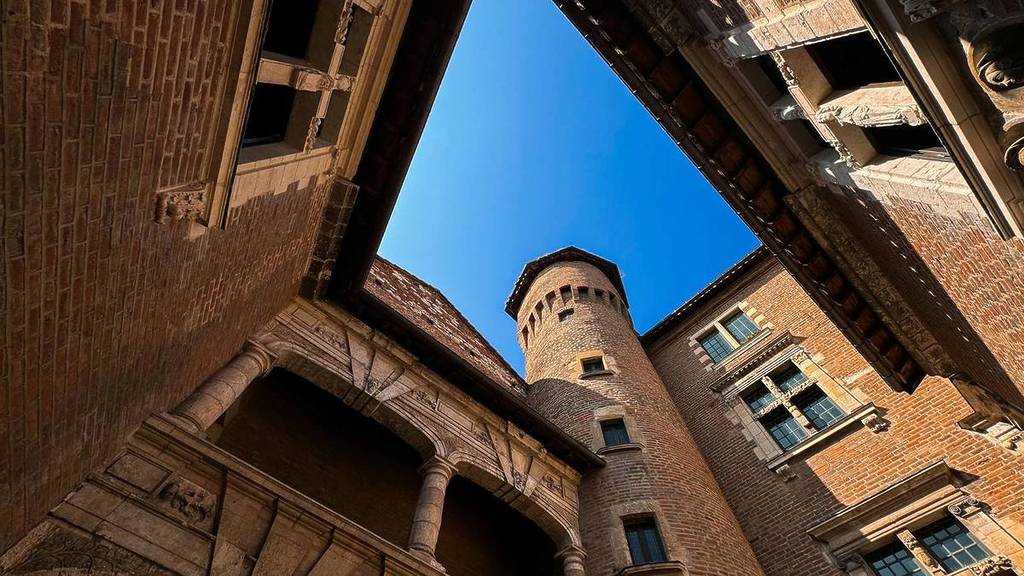
Did you know that just an hour from Toulouse stands an edifice more imposing than a castle, built from no less than 25 million red bricks? Monumental, almost intimidating, it seems to have been built to defy time and the gaze. Seen from afar, it looks like a medieval citadel or bastion. But this brick giant, which took two centuries to build, is neither a palace nor a military fortress: it’s a cathedral, and not just any cathedral. In 2022, Internet users voted it France’s most beautiful cathedral in a competition organized by Henoo. We tell you all about this fascinating religious building.
A cathedral in response to heresy
Construction began in 1282, in a tense context. The South-West had just emerged from the Albigensian Crusade, and the Catholic Church was determined to reassert its authority. The result? A single, massive, closed edifice, with no exterior frills. A cathedral of combat, so to speak.
Red brick, chosen for its local availability, as in Toulouse, takes on a symbolic dimension here: the color of flesh, it recalls the incarnation of Christ, which the Cathars rejected. A spiritual message engraved in stone.
An imposing exterior, a refined interior
Inside, the atmosphere changes. Once inside, visitors are struck by the profusion of colors, paintings and details. Under the 16th-century blue vault, the Last Judgment fresco stretches for almost 100 meters. Painted between 1509 and 1512, it remains one of the largest groups of Italian Renaissance paintings visible in France today.
Just ahead, a masterpiece in its own right: the flamboyant Gothic rood screen, a veritable lacework of sculpted stone, 18 metres long and adorned with 87 statues. Rescued from the French Revolution, it is one of the few surviving rood screens in France.
Crowned by a 78-metre bell tower, the cathedral dominates the whole town and the Tarn river. You can still hear its five bells, including “Valérien”, a drone weighing over 3 tonnes. Down below, brick streets, a palace transformed into a museum, and a gentle, tranquil atmosphere.
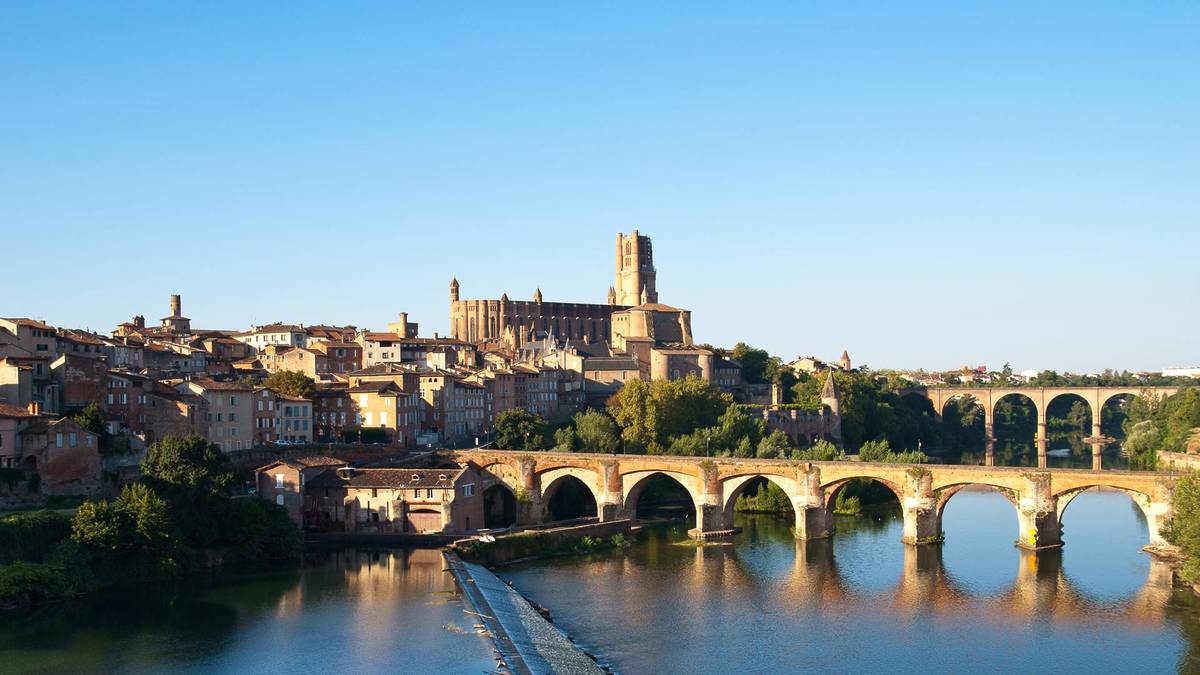
Sainte-Cécile Cathedral overlooks Albi
This architectural masterpiece is, of course, Albi’s Cathédrale Sainte-Cécile, a UNESCO World Heritage Site since 2010. The surrounding historic center, the banks of the Tarn and the Toulouse-Lautrec Museum complete the visit. And of course, extend the magic with a coffee on Place Sainte-Cécile or a stroll along the banks of the Tarn.
🚆 Access: 1h from Toulouse by train or car.
🕰️ Practical info: free admission (except choir), open every day.